
When you walk into a spotless office, hotel, or commercial facility, what you’re seeing is the result of expert processes, trained cleaners, and, critically, the right equipment. Commercial cleaning is far more specialised than most people realise, relying on high-performance tools designed to deliver efficiency, safety, and consistent results at scale.
Whether you're a facilities manager, business owner, or simply curious about how professional cleaning teams achieve that polished finish, this behind-the-scenes look breaks down the essential equipment commercial cleaners use, how it works, and why it matters.
Why Equipment Matters in Commercial Cleaning
Commercial cleaning is about hygiene, workplace health, asset longevity, and the customer experience. Choosing the right equipment impacts:
-
Cleaning speed and efficiency
-
Quality and consistency of results
-
Air quality and allergen control
-
Longevity of flooring and furnishings
-
Safety for staff and building occupants
In the commercial world, improper tools don’t just slow teams down, they can also damage surfaces, miss contaminants, or create avoidable risks.
Core Categories of Commercial Cleaning Equipment
Below is a comprehensive breakdown of the tools most commonly used by commercial cleaners, from basic essentials to specialised machinery.
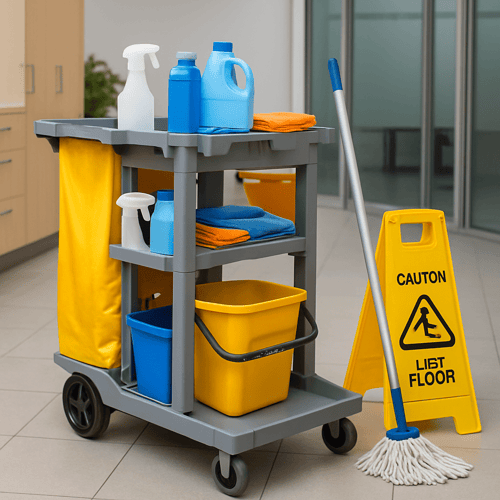
Vacuum Cleaners (Commercial Grade)
Industrial vacuums are one of the most relied-on tools in any cleaning operation. These machines are built to withstand continuous use and handle larger debris loads.
Types include:
-
Upright vacuums (for carpeted hallways and offices)
-
Backpack vacuums (ideal for mobility and tight spaces)
-
Wet & dry vacuums (for spills and construction clean-ups)
-
HEPA-filtered vacuums (for healthcare, allergens, and improved indoor air quality)
Why they matter:
HEPA filters capture fine particles, dust, and allergens that household vacuums can’t.
Cleaning frequency:
Used daily in most commercial spaces.
Floor Scrubbers and Polishers
Floor care equipment is essential for maintaining large surface areas such as foyers, corridors, warehouses, and retail floors.
Equipment in this category includes:
-
Auto-scrubbers
-
Buffers and burnishers
-
Rotary floor machines
-
Ride-on scrubbers for industrial settings
Why they matter:
Manual mopping simply can’t match the sanitisation power or efficiency of mechanical scrubbing.
Cleaning frequency:
-
Daily to weekly for high-traffic floors
-
Monthly polishing for hard flooring
-
Quarterly deep cleaning depending on foot traffic
Microfibre Cleaning Systems
Microfibre is an industry standard thanks to its ability to trap dust, bacteria, and oils more effectively than traditional cloths.
Common items:
-
Microfibre cloths
-
Microfibre mop heads
-
Colour-coded systems for hygiene control (e.g., red = bathrooms)
Why they matter:
Microfibre reduces cross-contamination and improves hygiene by capturing microbes mechanically, not just chemically.
Cleaning frequency:
Used daily across all surface areas.
Disinfecting and Sanitising Equipment
With hygiene expectations rising across workplaces globally, disinfecting has become a core service supported by advanced equipment.
Typical tools include:
-
Electrostatic sprayers
-
ULV foggers
-
Touchpoint disinfectant kits
-
Commercial-grade sanitisers and dwell-time compliant chemicals
Why they matter:
Electrostatic sprayers coat surfaces evenly (even those with complex shapes) making them more effective for shared spaces.
Cleaning frequency:
Daily or weekly; increased during flu season or outbreaks.
Pressure Washers
Used for exterior cleaning or industrial environments where dirt and grime require high-pressure water to dislodge.
Common usage:
-
Car parks
-
Warehouse floors
-
Building exteriors
-
Bin rooms
Why they matter:
They remove debris faster and more thoroughly than manual scrubbing.
Cleaning frequency:
Monthly or quarterly.
Hand Tools &Manual Equipment
Even with advanced machinery, manual tools are still essential.
This includes:
-
Squeegees
-
Dustpans and brooms
-
Grout brushes
-
High-reach dusters
-
Scrapers
Why they matter:
Mechanical cleaning can't reach everything; manual detailing finishes the job.
Commercial Cleaning Equipment Overview
| Equipment | Primary Use | Why It’s Important | Typical Frequency |
|---|---|---|---|
| Vacuums (HEPA, backpack, wet/dry) | Floors, carpets, allergen removal | Air quality + daily debris removal | Daily |
| Floor Scrubbers / Polishers | Hard floor maintenance | Efficiency + deep cleaning capability | Daily–Monthly |
| Microfibre Tools | Dusting, wiping, sanitising | Reduces bacteria + cross-contamination | Daily |
| Electrostatic Sprayers | Disinfecting touchpoints & shared spaces | Superior coverage + hygiene compliance | Weekly–As needed |
| Pressure Washers | Exterior and industrial cleaning | Removes heavy grime + boosts presentation | Monthly–Quarterly |
| Hand Tools (squeegees, brushes) | Detail cleaning & finishing tasks | Precision + access to small areas | Daily |
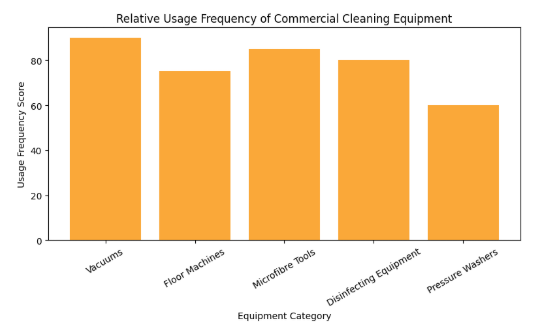
Usage Frequency of Commercial Cleaning Equipment
Here is a visual representation of equipment categories and their relative usage frequency in commercial cleaning operations:
Behind the Scenes: How Cleaning Teams Choose Their Equipment
Selecting the right cleaning equipment involves several factors:
1. Surface Type
Carpets require HEPA vacuums and carpet extractors. Hard floors benefit from auto-scrubbers.
2. Foot Traffic
Areas with high footfall need more frequent machine use.
3. Hygiene Requirements
Healthcare, childcare, and food prep environments need specific disinfecting tools.
4. Environmental Goals
Microfibre systems and eco-friendly chemicals are preferred for green cleaning strategies.
5. Safety Considerations
Equipment must meet workplace safety standards and reduce strain on cleaners.
How Often Should Commercial Cleaning Equipment Be Used?
Different equipment has different recommended usage patterns. The following is a general guide:
-
Daily: Vacuums, microfibre tools, hand tools
-
Weekly: Touchpoint disinfecting, bathroom deep cleaning
-
Monthly: Floor polishing, exterior cleaning (depending on weather)
-
Quarterly: Carpet extraction, pressure washing, high-dusting
Well-maintained equipment not only lasts longer but also improves cleaning outcomes.
The Future of Commercial Cleaning Equipment
The commercial cleaning industry continues to evolve with technology:
Autonomous scrubbers
Robotic floor machines are becoming more common in large facilities.
IoT-connected equipment
Provides real-time data on usage, maintenance needs, and coverage.
Eco-friendly chemical dispensing systems
Reduce waste and improve sustainability.
Advanced filtration vacuums
Improving indoor air quality is becoming a priority for businesses.
Final Thoughts on Commercial Cleaning Equipment
Commercial cleaning isn’t just about wiping and dusting - it’s a highly strategic service backed by powerful equipment designed to create cleaner, healthier, and more productive environments.
From vacuums and microfibre systems to electrostatic sprayers and industrial floor machines, each tool plays a specialised role. Knowing what equipment commercial cleaners use helps businesses understand the value behind professional cleaning services and the science that supports outstanding results.