
In most workplaces, cleaning is about appearance and comfort. In a medical centre or clinic, it is about patient safety. The same waiting room chair, reception counter, or examination bench is touched by unwell people all day long, including the elderly, the immunocompromised and the very young. Get the cleaning right and you quietly stop infections spreading. Get it wrong and the consequences are far more serious than a bad impression.
That is why medical cleaning is a genuinely specialised job, and why it is not something to hand to a general office cleaner. Here is what proper medical centre and clinic cleaning involves, the standards it needs to meet in Australia and what to look for in a provider.
Why Medical Cleaning is Different
A clinic is not a harder version of an office clean. It is a different discipline for a few reasons.
-
The stakes are higher. Healthcare-associated infections are a real risk and the people in a clinic are often more vulnerable to them than the general public.
-
It is regulated. Medical facilities are held to formal infection-prevention standards and are audited against them, which means cleaning has to be documented and defensible, not just done.
-
The surfaces carry more risk. Blood, bodily fluids, and contaminated waste are part of the environment, and they demand specific handling that ordinary cleaning does not cover.
-
Trust is on the line. Patients notice a clinic that looks and smells clean, and they draw conclusions about the care they will receive from it. As we cover in why good workplace hygiene matters more than you realise, cleanliness is a signal, and in healthcare that signal is amplified.
The Standards that Apply in Australia
You do not need to memorise the regulations, but it helps to know the framework your cleaning should be aligned to.
-
The NSQHS Standards. The National Safety and Quality Health Service Standards, administered by the Australian Commission on Safety and Quality in Health Care, set the bar for Australian healthcare. Standard 3, Preventing and Controlling Infections, deals directly with environmental cleaning, including how surfaces and equipment are cleaned and disinfected and how often.
-
The Australian Guidelines for the Prevention and Control of Infection in Healthcare. Published by the NHMRC, these are the foundational guidance on routine cleaning, when disinfection is required, and matching cleaning frequency to risk.
-
RACGP Standards for general practices. Accredited GP clinics are assessed against these, and infection prevention and cleaning are part of the picture.
-
TGA requirements for disinfectants. Disinfectants used in healthcare settings should be approved by the Therapeutic Goods Administration, and hospital-grade products carry specific label claims about what they kill.
The practical upshot is that a clinic clean has to be systematic, evidence-based, and able to stand up to an audit.
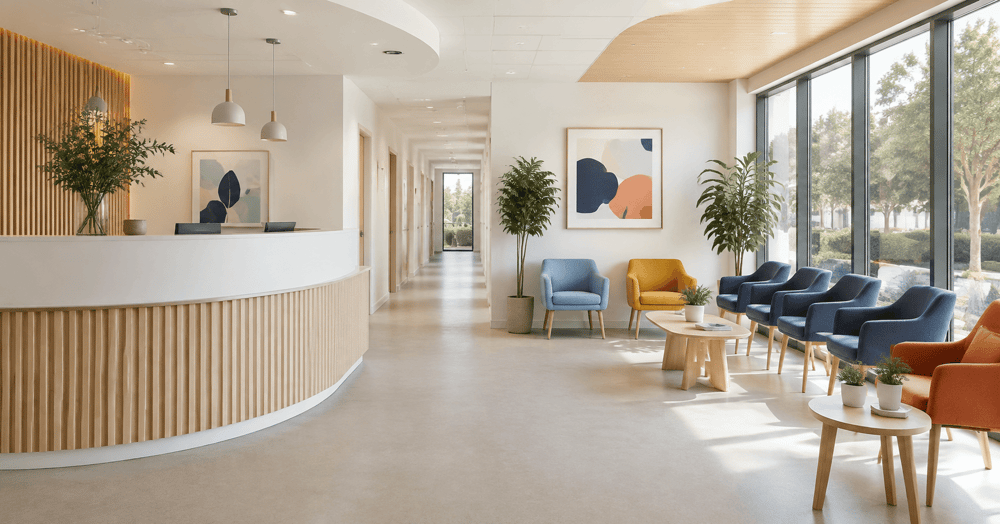
What Proper Medical Cleaning Actually Involves
Meeting those standards comes down to a set of concrete practices. A good medical cleaning provider will do all of the following as a matter of course.
-
Risk-based zones and frequency. Not every area carries the same risk. Clinical spaces like treatment and procedure rooms need more frequent and more thorough attention than a back office, and high-touch points get cleaned most often of all.
-
Clean first, then disinfect. Disinfectant does not work properly on a dirty surface, so cleaning removes the grime and disinfection kills what remains. The disinfectant also has to sit for its full contact time to actually work, which is the step non-specialists most often miss.
-
Hospital-grade, TGA-approved disinfectants. Clinical surfaces call for products with the right kill claims, used at the correct concentration, not whatever generic spray is in the cupboard.
-
Colour-coded equipment. Using separate, colour-coded cloths and mops for bathrooms, clinical areas, and general spaces prevents cross-contamination. This simple system, which we explain in our piece on what microfibre cloth colours mean, is central to doing healthcare cleaning safely.
-
Between-patient and high-touch cleaning. Examination benches, shared equipment, door handles, light switches, and reception counters need regular attention through the day, not just an evening clean.
-
Correct spills and waste handling. Blood and bodily fluid spills are managed with proper kits and PPE, clinical waste is segregated from general waste, and cleaners never handle sharps, which are the responsibility of clinical staff.
-
Trained, protected staff. Medical cleaners should be trained in infection control, use appropriate PPE, and understand the environment they are working in.
-
Discretion and privacy. Clinics hold sensitive information and vulnerable patients, so cleaning is often done after hours and always with an awareness of confidentiality.
-
Verification. The best providers document what was cleaned and when, and support auditing so the facility can prove its standards, which ties into the certification-backed approach we take across our services (more on that in our guide to what commercial cleaning services should include).
Why Medical Cleaning is Not a Job for a General Cleaner
This is the heart of it. A general commercial cleaner can make a clinic look clean. Making it genuinely safe and audit-ready is a different skill set entirely, and the gap between the two is exactly where risk lives.
A specialist understands the difference between cleaning and disinfecting, knows which product to use where, follows a colour-coded system without being told, handles spills and waste correctly, and cleans to a documented, repeatable process rather than by eye. For a medical centre, that difference is not a nice-to-have. It is the whole point.
Where Cleancorp Fits
Cleancorp cleans health-sensitive environments across Australia, including aged care and other settings where hygiene is not negotiable. We bring trained teams, hospital-grade TGA-approved products, colour-coded systems to prevent cross-contamination, and documented, repeatable processes. Our HACCP certification, explained in what our HACCP certification means for you, reflects how seriously we take hygiene in environments where it genuinely matters.
If you run a medical centre or clinic and want cleaning that protects your patients and stands up to scrutiny, we would love to help.
Get a free quote and let's talk about cleaning that meets the standard your patients deserve.
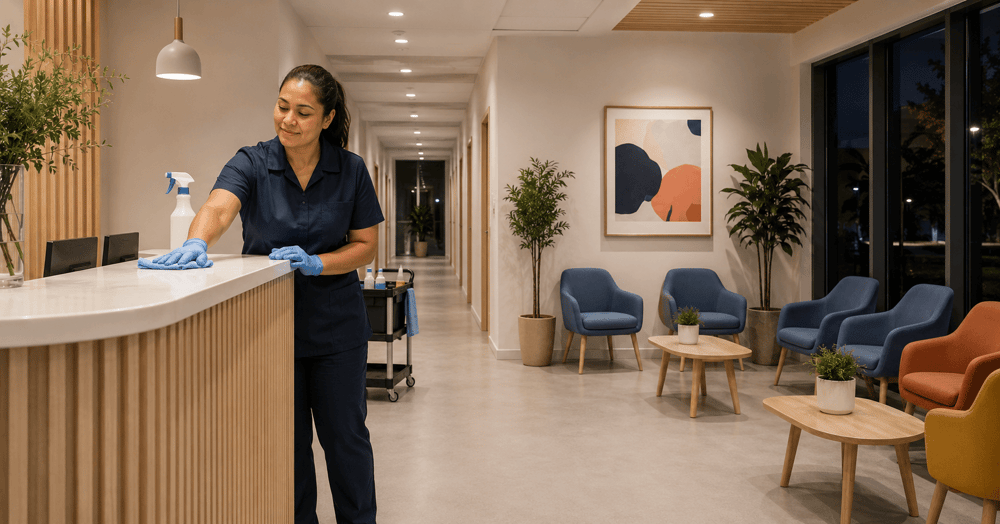
Frequently asked questions
What cleaning standards apply to medical centres and clinics in Australia?
Australian healthcare cleaning is guided by the National Safety and Quality Health Service (NSQHS) Standards, administered by the Australian Commission on Safety and Quality in Health Care, with Standard 3 covering the prevention and control of infections and the environmental cleaning that supports it. Underpinning that are the Australian Guidelines for the Prevention and Control of Infection in Healthcare, published by the NHMRC, which set out routine cleaning practices, when disinfection is required, and how cleaning frequency should match the level of risk in each area. Accredited general practices are also assessed against the RACGP Standards, which include infection prevention. In practice this means a clinic clean must be systematic, use appropriate products, and be documented well enough to stand up to an audit rather than simply looking clean.
What is the difference between cleaning and disinfecting in a clinic?
Cleaning physically removes dirt, organic matter, and many germs from a surface using detergent and water. Disinfecting uses chemicals to kill the microorganisms that remain. In a clinical setting you almost always need both, and crucially in that order, because disinfectant cannot work properly on a surface that is still soiled. The other detail that matters is contact time. A disinfectant has to stay wet on the surface for the period stated on its label, often anywhere from thirty seconds to several minutes, to actually kill what it claims to. Spraying and immediately wiping dry gives a false sense of security. A specialist medical cleaner treats cleaning and disinfecting as two distinct, deliberate steps rather than a single wipe.
Are hospital-grade disinfectants required in medical cleaning?
For clinical surfaces, yes, you want disinfectants that are appropriate for a healthcare environment and approved by the Therapeutic Goods Administration. Hospital-grade disinfectants carry specific claims about the organisms they are effective against, and they need to be used at the correct concentration and contact time to deliver those results. The right product depends on the surface and the situation, and in some cases, such as certain spills or specific pathogens, a chlorine-based product at a defined concentration is required. The key point is that product selection in a clinic is a deliberate, informed decision, not a matter of grabbing whatever spray is closest. A good provider matches the product to the risk and can tell you exactly what they are using and why.
How often should a medical centre be cleaned?
There is no single answer, because healthcare cleaning is risk-based. Clinical areas such as treatment and procedure rooms, along with high-touch surfaces like examination benches, reception counters, door handles, and waiting-room chairs, need frequent attention, often multiple times a day and between patients. Lower-risk areas such as back offices can be cleaned less often. Most clinics combine daily thorough cleaning with more frequent touch-ups of the busiest and highest-risk points, plus immediate cleaning of any spill or contamination. The right schedule depends on your patient volume, the services you provide, and the layout of your rooms, which is why a provider should assess your specific clinic rather than apply a generic frequency.
Can a regular commercial cleaner clean a medical clinic?
They can make it look clean, but that is not the same as making it safe and compliant. Medical cleaning requires specific knowledge and processes: understanding risk-based zones, using colour-coded equipment to prevent cross-contamination, selecting and correctly using hospital-grade disinfectants, managing blood and bodily fluid spills, segregating clinical waste, and documenting the work for auditing. A general office cleaner is rarely trained in any of this. For a medical centre, using a provider that specialises in health-sensitive environments is not an upgrade, it is a basic requirement for protecting patients and meeting the standards your accreditation depends on.